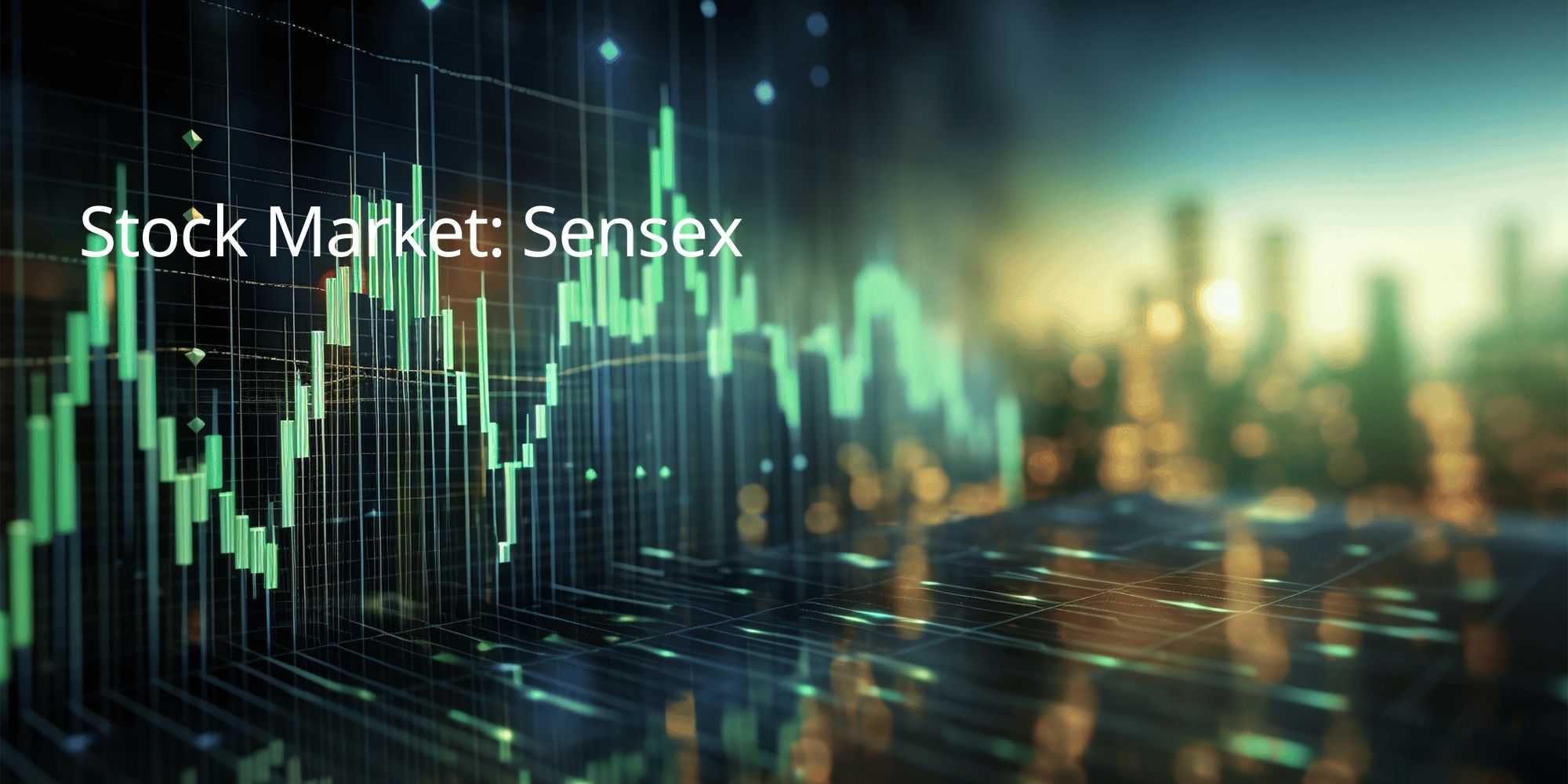
The S&P BSE Sensex is one of the most closely watched equity benchmarks in emerging markets and a primary gauge of India’s economic direction. For traders, it represents far more than an index level on a chart. It reflects capital flows, sector leadership, policy expectations, and investor sentiment tied to India’s largest corporations. Whether you trade Indian equities directly or access index-linked instruments via platforms like PlexyTrade, understanding how the Sensex works is essential for informed decision-making.
Understanding the S&P BSE Sensex: An Overview of India’s Premier Index
The S&P BSE Sensex, commonly referred to as the Sensex, is India’s oldest equity index. Introduced in 1986 with a base year of 1979, it tracks the performance of 30 large, financially sound, and highly liquid companies listed on the Bombay Stock Exchange. These companies are considered leaders within their respective industries and collectively provide a snapshot of India’s corporate and economic health.
The index is calculated using a free-float market capitalization methodology. Only shares available for public trading are included, while promoter holdings, government stakes, and other locked-in shares are excluded. This ensures the index reflects actual market liquidity and tradable value rather than headline ownership structures. For traders on PlexyTrade, this makes Sensex movements a more accurate representation of real demand and supply dynamics.
Beyond its signaling role, the Sensex underpins a wide range of financial products, including index derivatives, mutual funds, and ETFs. Its movements influence domestic portfolios and global emerging-market allocations alike.
Key Constituents of the Sensex: Who Makes Up India’s Leading Stock Index?
The Sensex derives its influence from the heavyweight stocks that compose it. Its 30 constituents span core sectors such as banking, information technology, energy, financial services, consumer goods, and telecommunications. This sector mix allows the index to reflect both domestic consumption trends and global economic linkages.
Prominent constituents include Reliance Industries, HDFC Bank, ICICI Bank, Tata Consultancy Services, Infosys, Bharti Airtel, State Bank of India, and Bajaj Finance. These companies carry significant weight due to their market capitalization and liquidity, meaning their price movements can materially shift the index.
Inclusion in the Sensex is governed by strict criteria. Companies must demonstrate sustained market capitalization, high trading volumes, consistent revenues from core operations, and broad investor participation. For traders, monitoring these constituents individually is critical. Earnings surprises, regulatory developments, or sector-specific news affecting a heavyweight stock can quickly translate into index-level volatility.
PlexyTrade allows you to track Sensex performance alongside its major constituents in real time, helping you align index-based strategies with stock-specific catalysts.
Sensex vs Nifty 50: Comparing India’s Top Stock Market Indices
India’s market narrative is often framed through two benchmarks: the Sensex and the Nifty 50. While both track large-cap stocks and use free-float market capitalization weighting, they differ in composition and scope.
The Sensex includes 30 companies listed on the Bombay Stock Exchange, making it more concentrated and heavily weighted toward mega-cap names. The Nifty 50, listed on the National Stock Exchange, tracks 50 stocks and offers broader sector representation.
Because of this, the Sensex can react more sharply to moves in a few heavyweight stocks, while the Nifty 50 tends to reflect a wider cross-section of market activity. Liquidity in derivatives is typically deeper for Nifty products, but Sensex-based instruments remain widely used for benchmarking and directional exposure.
For traders using PlexyTrade, the choice between Sensex and Nifty-linked instruments often comes down to strategy. Sensex exposure suits those focused on large-cap leadership and concentrated moves, while Nifty exposure offers broader market representation. Both indices are valuable tools, and understanding their differences allows you to select the benchmark that best matches your risk profile and market outlook.
Trading Strategies for Sensex: Futures, Options, and More
Trading the Sensex offers multiple instruments, each suited to different objectives, time horizons, and risk profiles. Futures and options remain the most actively used tools for both speculation and hedging.
Sensex futures allow you to take a direct directional view on the index. By buying or selling a futures contract, you can profit from upward or downward moves without holding the underlying stocks. Futures are commonly used to hedge portfolio exposure. For example, if you expect short-term downside risk, selling Sensex futures can help offset potential losses in equity holdings.
Sensex options provide greater flexibility. Call and put options support a wide range of strategies, from simple protection to income generation. Buying put options provides downside protection during volatile periods, while call options offer leveraged participation in upside moves. More advanced strategies, such as spreads, straddles, and strangles, help you trade volatility or fine-tune risk-reward profiles based on market expectations.
Beyond derivatives, passive products such as ETFs and index funds track Sensex performance and suit traders or investors seeking long-term exposure with lower turnover. Relative-value approaches, such as pair trading Sensex against the Nifty 50, can also be used to exploit valuation or momentum divergences between India’s two main benchmarks.
PlexyTrade’s MT5 platform supports these strategies with fast execution, tight spreads, and built-in risk management tools, allowing you to implement Sensex trades efficiently across varying market conditions.
Current Trends in the Sensex: What Investors Need to Know for 2024 and Beyond
As of early 2026, the Sensex is trading in the 84,000-84,500 range, within a 52-week range of roughly 71,425-86,159 points. Valuations remain elevated but not extreme, with the index trading at a price-to-earnings ratio of around 23-24, placing it near the upper end of historical averages.
Over the past year, the Sensex has delivered gains of approximately 8-9 percent, demonstrating resilience amid global uncertainty and periodic risk-off episodes. Sector leadership has rotated, with financials, information technology, and industrials taking turns driving index performance. This rotation reflects shifts in domestic demand, export trends, and global technology spending.
Looking ahead, several factors will continue to influence the Sensex. Domestic GDP growth, Reserve Bank of India policy decisions, inflation trends, and government infrastructure spending remain central drivers. At the same time, global risk sentiment, foreign capital flows, and currency movements can trigger short-term volatility.
For traders using PlexyTrade, staying aligned with these macro and sectoral forces is essential. The MT5 platform’s economic calendar, real-time news, and analytical tools help you anticipate key inflection points, proactively manage risk, and capitalize on evolving Sensex trends with greater confidence.